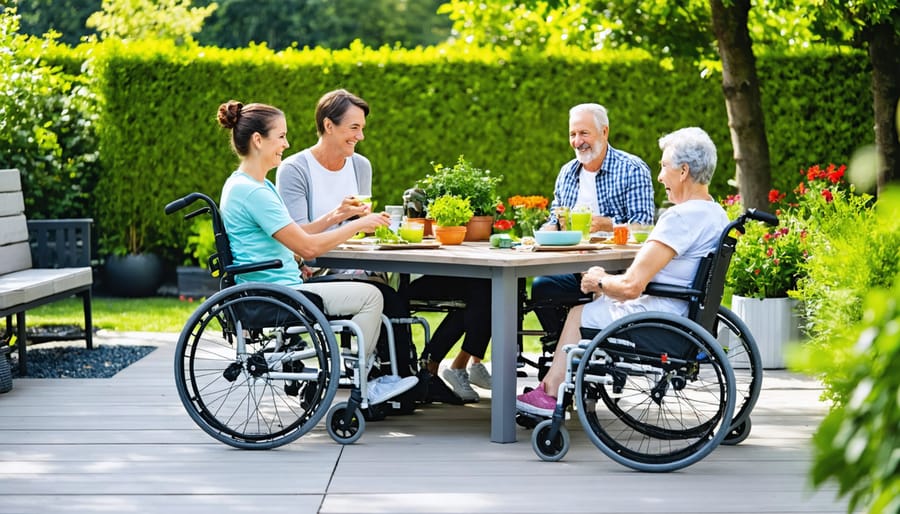
Transform Your Outdoor Space: Smart Adaptive Equipment That Actually Works
Transform your outdoor space into an accessible paradise by strategically integrating adaptive equipment that combines safety, functionality, and aesthetic appeal. Start with adjustable-height raised garden beds that accommodate both standing and seated gardeners, featuring extended reaching tools and ergonomic handles. Install slip-resistant, weather-resistant decking materials with gentle slopes rather than steps to create your perfect outdoor oasis that welcomes everyone.
Modify existing outdoor furniture with stabilizing bases, waterproof cushions, and adjustable components that adapt to different mobility needs while maintaining a cohesive design scheme. Consider smart technology integration, such as motion-activated lighting and voice-controlled irrigation systems, to enhance independence and enjoyment of outdoor spaces.
Incorporate multi-level seating areas with sturdy handrails and transfer platforms, allowing smooth transitions between different outdoor zones while preserving the natural flow of your landscape design. These thoughtful adaptations ensure everyone can fully participate in outdoor activities, from gardening to entertaining, without compromising on style or comfort.
Essential Adaptive Outdoor Furniture Solutions
Height-Adjustable Tables and Seating
Height-adjustable outdoor furniture is a game-changer for creating inclusive outdoor spaces that accommodate wheelchair users and people with varying mobility needs. These adaptable pieces allow everyone to dine, work, or relax comfortably at the perfect height for their specific requirements.
Modern adjustable tables typically feature easy-to-use hydraulic or electric mechanisms that can be operated with minimal effort. Look for tables with a height range between 22 and 32 inches to ensure compatibility with different wheelchair heights and styles. Many models come with simple push-button controls or hand cranks that allow users to modify the height independently.
When selecting adjustable seating, consider options with removable arms and swivel capabilities. These features make it easier for people to transfer from wheelchairs to seats. Weather-resistant materials like powder-coated aluminum and marine-grade stainless steel ensure durability while keeping the furniture lightweight enough for easy adjustment.
For DIY enthusiasts, creating custom height-adjustable furniture is possible using telescoping legs and locking mechanisms. However, ensure any DIY solutions are sturdy and well-balanced to prevent tipping. Some creative options include modular table bases that can be reconfigured as needed or platforms that can be added or removed to adjust height.
Remember to leave adequate clearance space around adjustable furniture (typically 36 inches) to allow for comfortable wheelchair navigation and ensure all adjustment mechanisms are easily accessible from a seated position.

Weather-Resistant Transfer Solutions
Creating safe and reliable transfer points in your outdoor spaces requires furniture that can withstand various weather conditions while maintaining stability. When designing weather-ready outdoor spaces, transfer benches and platforms made from marine-grade materials offer the perfect solution.
Look for transfer surfaces constructed with composite decking or treated hardwoods, which resist warping and maintain their structural integrity even in wet conditions. These materials provide secure grip while preventing slipping, essential for safe transfers between mobility devices and outdoor furniture.
Popular options include adjustable-height transfer benches with powder-coated aluminum frames and UV-resistant seats. These pieces can be permanently mounted or designed with removable components for seasonal storage. For added stability, consider models with rubber-tipped legs or deck-mounting brackets.
DIY enthusiasts can create custom transfer stations using weather-resistant materials like cedar or composite boards. Key features should include non-slip surfaces, sturdy handrails, and proper drainage to prevent water pooling. Remember to incorporate adequate lighting around transfer areas for safety during evening hours.
Regular maintenance is minimal but important – inspect hardware monthly, clean surfaces regularly, and check for any loose components. With proper planning and materials, your outdoor transfer solutions can provide years of safe and reliable service while complementing your landscape design.
Smart Technology Integration for Outdoor Accessibility
Voice-Controlled Features
Voice control technology has revolutionized how we interact with our outdoor spaces, making them more accessible and easier to manage. By integrating smart outdoor lighting solutions with voice commands, you can effortlessly adjust brightness levels and create custom lighting scenes without leaving your seat.
Modern retractable awnings now respond to simple voice prompts, extending or retracting based on your needs or weather conditions. This hands-free operation is particularly valuable for those with mobility challenges or when your hands are full with gardening tools or outdoor entertaining items.
Entertainment systems have also embraced voice control, allowing you to manage outdoor speakers, TVs, and even projection systems through popular voice assistants like Alexa or Google Home. You can start your favorite playlist, adjust volume, or switch inputs without interrupting your outdoor activities.
Setting up these voice-controlled features is surprisingly straightforward. Most systems connect through your home’s WiFi network and can be configured using smartphone apps. The key is choosing compatible devices that work with your preferred voice assistant platform. For optimal performance, consider installing a WiFi extender to ensure strong connectivity throughout your outdoor space.
Remember to create simple, intuitive voice commands and set up routines that can trigger multiple actions at once. For example, a single “outdoor movie night” command could dim the lights, lower the awning, and power up your entertainment system simultaneously.
Remote-Access Solutions
Today’s smart technology has revolutionized how we interact with outdoor spaces, making them more accessible than ever. Smartphone-controlled equipment allows users to manage their outdoor environment with just a few taps on their screen, perfect for those with mobility challenges or anyone seeking convenient control options.
Popular remote-access solutions include smart irrigation systems that let you adjust watering schedules and monitor moisture levels from anywhere. Motion-activated lighting can be controlled through apps, ensuring pathways are well-lit when needed. Many modern pergolas and awnings now come with smartphone controls, allowing easy adjustment of shade coverage without physical effort.
For garden enthusiasts, automated plant care systems can be monitored and adjusted remotely, controlling factors like temperature, humidity, and ventilation in greenhouses or garden beds. Smart door and gate operators make entering and exiting outdoor spaces effortless, while app-controlled security cameras provide peace of mind.
The latest innovations include voice-command compatibility through virtual assistants like Alexa or Google Home, making these solutions even more accessible. Many systems can be integrated into existing home automation setups, creating a seamless indoor-outdoor living experience.
When choosing remote-access equipment, consider factors like WiFi reliability in your outdoor space, battery life for wireless devices, and weather resistance ratings. Most systems come with user-friendly apps and detailed setup guides, making installation straightforward for DIY enthusiasts or professional installers.

DIY Adaptive Equipment Projects
Modified Garden Tools
Standard garden tools can be easily modified to accommodate various physical needs, making gardening accessible to everyone. Start by extending tool handles using PVC pipes or wooden dowels – this simple modification reduces the need to bend or stretch. Secure the extensions with strong adhesive and reinforcing screws for durability.
For those with limited grip strength, build up tool handles using foam pipe insulation or bicycle handlebar tape. These materials provide cushioning and increase the handle diameter for better control. Secure the padding with waterproof tape or zip ties to prevent slipping.
Add ergonomic grips by attaching D-shaped handles perpendicular to existing tool handles. This modification allows users to maintain a natural wrist position and apply pressure more effectively. For one-handed use, install forearm cuffs made from adjustable straps and padding material to tools like trowels and pruners.
Consider angle modifications for common tools. Bend trowel heads or rake tines slightly to reduce wrist strain – this can be done carefully using a heat gun on metal tools or by purchasing pre-bent alternatives. For pruners and shears, look for ratcheting mechanisms that multiply cutting force with less hand strength.
Weight reduction is another crucial modification. Drill holes in non-essential parts of metal tools or replace heavy materials with lightweight alternatives like aluminum or reinforced plastic. Just ensure these modifications don’t compromise the tool’s structural integrity.
Remember to maintain modified tools regularly, checking connections and padding for wear. Store them in easily accessible locations and consider using tool organizers with clear labels for quick identification.

Custom Outdoor Storage Solutions
Creating accessible outdoor storage solutions doesn’t have to be complicated or expensive. The key is designing units that combine easy access with weather protection and practical organization. Start by choosing a location that’s easily reachable from both your home and outdoor living spaces, preferably with a flat, stable surface.
For wheelchair users, consider building storage units with pull-out drawers or sliding shelves positioned between 24 and 48 inches from the ground. Install handles that can be operated with minimal grip strength, such as D-shaped pulls or touch-latch mechanisms. Ensure all doors have a clearance width of at least 32 inches and can be opened with one hand.
Weather-resistant materials like treated lumber, marine-grade plywood, or heavy-duty plastic are essential for longevity. Add a slight slope to the roof (about 1-2 degrees) to prevent water pooling, and include weather stripping around doors and openings. For better accessibility, install motion-sensor lighting and consider adding a small overhang to protect users from rain while accessing the storage.
Organization is crucial – implement a color-coding system or clear labels at eye level for easy identification. Include adjustable shelving to accommodate different-sized items and consider using bins with wheels for heavier objects. If building a larger unit, incorporate a turntable system for corner storage to eliminate the need to reach into deep spaces.
Remember to maintain clear pathways to and around the storage unit, using non-slip materials for any ramps or platforms. Regular maintenance checks will ensure all mechanisms continue working smoothly and safely.
Maintenance and Care Tips
Regular maintenance of your adaptive outdoor equipment ensures longevity and safe operation for years to come. Start by creating a maintenance schedule that includes weekly, monthly, and seasonal checks. After each use, wipe down equipment with a mild soap solution and dry thoroughly to prevent rust or degradation, especially for durable outdoor materials exposed to the elements.
For mechanical components like wheelchair lifts or adjustable handrails, lubricate moving parts monthly using appropriate weather-resistant lubricants. Check all nuts, bolts, and fasteners regularly, tightening any loose connections. Pay special attention to weight-bearing components and safety features.
During seasonal transitions, conduct thorough inspections of all equipment. Remove any debris, check for wear and tear, and address any signs of rust or corrosion immediately. For wooden components, apply weather-resistant sealant annually to protect against moisture damage. Rubber grips and non-slip surfaces should be checked for wear and replaced when showing signs of deterioration.
Store portable equipment in a covered area when not in use, and consider using weatherproof covers for permanently installed items during harsh weather. Keep drainage areas clear around fixed equipment to prevent water accumulation and potential damage.
Battery-operated components require special attention. Check battery levels regularly and keep spare batteries on hand. Clean battery contacts and ensure charging ports remain free from debris. For solar-powered features, clean panels monthly and verify proper charging function.
Document all maintenance activities and keep manufacturer manuals readily available. Create a simple checklist for regular maintenance tasks and note any repairs or replacements made. This record-keeping helps track equipment condition and anticipate needed updates or replacements.
Remember, well-maintained equipment isn’t just about longevity – it’s about safety and reliability for those who depend on it daily.
Creating an accessible outdoor space isn’t just about adding equipment – it’s about opening up a world of possibilities for everyone to enjoy the great outdoors. Throughout this guide, we’ve explored various adaptive solutions, from automated doors and ramps to specialized gardening tools and recreational equipment. Remember that successful implementation starts with careful planning and consideration of individual needs.
Whether you’re tackling a DIY project or working with professionals, focus on creating spaces that combine functionality with comfort and style. Start small if needed – perhaps with a simple raised garden bed or modified seating area – and expand your outdoor accessibility features over time. The key is to choose equipment and modifications that best suit your specific requirements and lifestyle.
Don’t forget to regularly maintain your adaptive equipment and update it as needs change or new technologies emerge. By investing in quality outdoor adaptive solutions, you’re not just creating an accessible space – you’re building an inclusive environment where everyone can participate in outdoor activities and make lasting memories together. Take that first step today and transform your outdoor space into an accessible paradise for all to enjoy.